

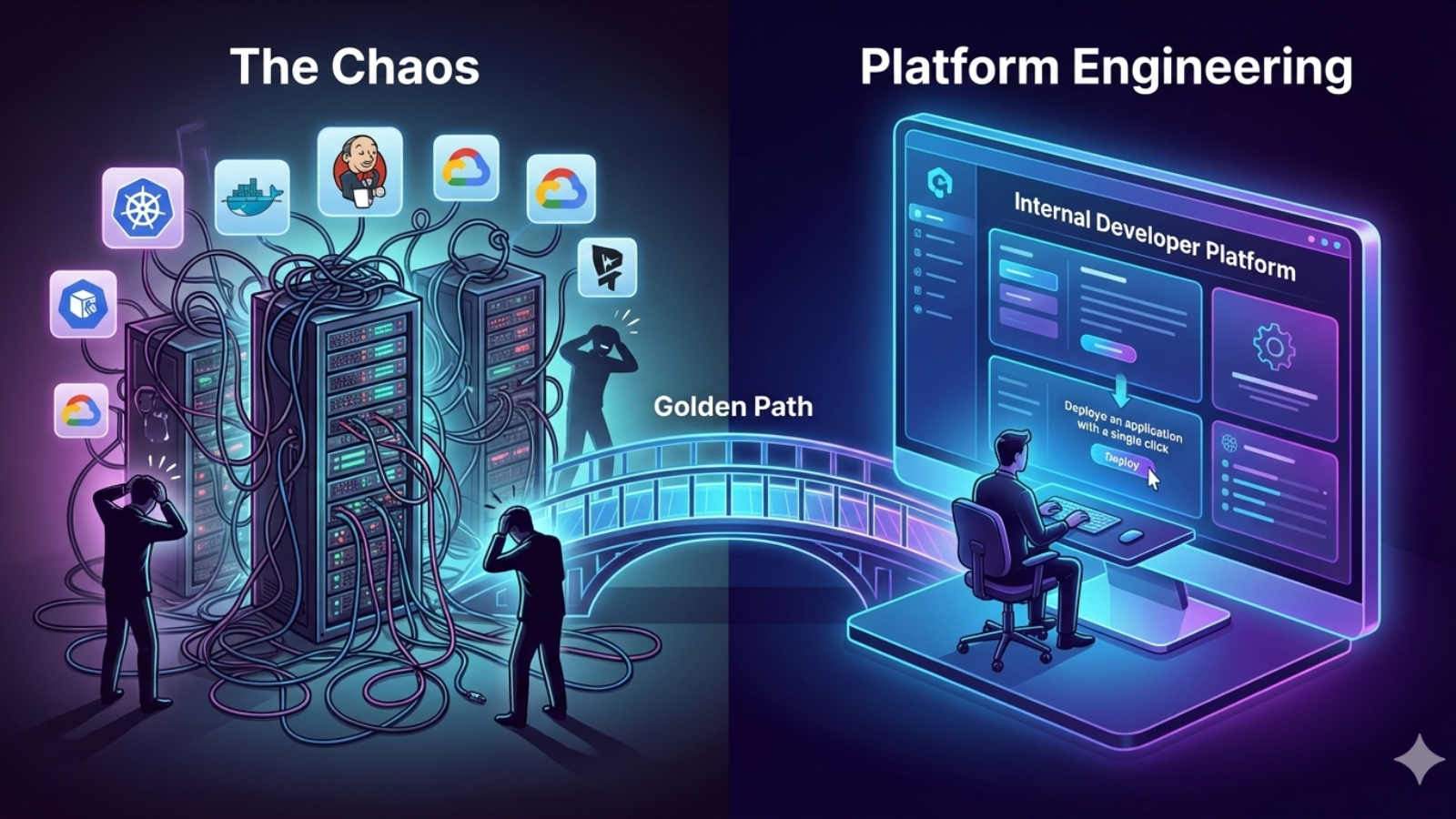
A decade ago, “You build it, you run it” was the revolutionary mantra of DevOps. It broke down silos and accelerated deployment. But in today’s complex landscape of multi-cloud environments, Kubernetes clusters, and sprawling microservices, that mantra has often mutated into “You build it, you figure out the infrastructure, you secure it, and you wake up at 3 AM when it breaks.”
At Greycats Tech, we see many organizations hitting a “DevOps wall.” Developers are overwhelmed with cognitive load, spending more time wrestling with toolchains than writing features. The solution isn’t more DevOps tools; it’s a fundamental shift in approach. Enter Platform Engineering.
What is Platform Engineering, Anyway?
Platform Engineering is the discipline of designing and building toolchains and workflows that enable self-service capabilities for software engineering organizations in the cloud-native era.
Think of it this way: Instead of every application team building their own bespoke infrastructure pipeline, a dedicated Platform Team builds a standardized, productized Internal Developer Platform (IDP). The platform team treats developers as their customers. Their goal is to provide “Golden Paths”—paved routes to production that are secure, compliant, and easy to use by default.
The Crisis of Cognitive Load
Why is this trending now? Because the complexity of modern tech stacks has become unsustainable for individual developers. Expecting a frontend engineer to be an expert in React, Kubernetes networking, IAM roles, and Terraform is unrealistic and inefficient.
When developers are forced to act as part-time infrastructure engineers, velocity plummets, burnout rises, and security risks increase due to misconfigurations. Platform Engineering abstracts away this complexity.
The Core Benefits for Your Business
Adopting a Platform Engineering mindset offers transformative benefits:
- Skyrocketing Developer Productivity: By providing self-service infrastructure (e.g., “Spin up a test environment with one click”), developers get back to what they do best: coding business logic.
- Enhanced Security and Governance: “Golden Paths” ensure that security policies and compliance standards are baked into the infrastructure from day one, rather than bolted on at the end.
- Standardization without Stagnation: An IDP provides standard tooling, reducing “shadow IT” and the maintenance nightmare of every team using a different deployment tool.
- Faster Time-to-Market: Frictionless deployment means features get to customers faster.
More Than Just Tools: A Cultural Shift
It’s vital to understand that Platform Engineering isn’t just about buying a new tool labeled “IDP.” It’s a product mindset. The platform team must interview their internal customers (developers), understand their pain points, iterate on the platform, and market it internally. If the platform isn’t easier to use than doing it “the old way,” developers won’t adopt it.
Conclusion: Building the Foundation for Scale
If your engineering teams are bogging down under the weight of their own tools, it’s time to rethink your approach. Platform Engineering is the next logical step in the cloud-native evolution, bridging the gap between complex infrastructure and a smooth developer experience. At Greycats Tech, we help organizations navigate this transition, moving from infrastructure chaos to streamlined innovation.
Add a Comment